Psalms 149 and 150: Today's readings bring me to the final two psalms of the psalter, and I made my deadline of 150 psalms in 77 days, even with forgetting to post on a few days. Although it would be easy to say with the psalmist: Praise the Lord (150:1) and leave it at that, both these psalms have elements in them that deserve some comment. Psalm 149 a, hymn psalm, calls on the congregation to praise God wtih songs and instruments. Sound great until verse 6, which says: "let the high praises of God be in their throats and two-edged swords be in their hands." Walker-Jones says 150: 6-9 have been used in the past to incite war and that to read them literally can be dangerous. It seems to me the sacred scripture is often a double-edge sword (although I'm not keen on that violent image) and there's always the danger that it can be used to justify many causes. Walker-Jones says that underlying these verses is a call for justice and during the time this was written, violence may have been the only way to do justice and restore peace.
Psalm 150 has no such double-edged swords, unless one doesn't happen to like dancing and pipes and clanging symbols. All of God's creation is asked to praise God for mighty deeds and unsurpassing greatness. On Sunday, Dec. 13, Christians around the world are asked to take this literally by ringing church bells or beating on drums and shaking noisemakers to call people to prayer and action on climate change. This psalm is asking all creation to praise God, and that action by the World Council of Churches is asking humans to make noise on behalf of creation.
Thanks to my readers for accompanying me on this blogging journey through the Psalms. Reaching the end is a double-edged sword as well (what would be a less violent image that conveys the good news, bad news effect?) since I am done reading and reflecting and responding to the psalms today. I'm happy to have reached the goal, but I will miss the discipline of reading and responding every day. After the first couple of weeks, I was doubting whether I could continue this project and keep finding interesting things to say about the Psalms. But I've only scratched the surface, and although this blog is now complete, I know the Psalms will be a source of inspiration, reflection and motivation for a long time.
NOTE: I'll be keeping the blog online for a few more weeks, and then I intend to take it down. I'm not a fan of blogs without current and updated posts, but I know some people are still making their way through the readings.
Tuesday, December 1, 2009


Monday, November 30, 2009
Snow like wool and frost like ashes
Psalms 147 and 148: On this last day of November, I woke up to a radio commentator saying that the month was the among the warmest on record. A November in Winnipeg usually means lots of snow and cold, but we've had a string of beautiful, above freezing days. My sons rode their bikes to school again today. But that may not last, since an Alberta Clipper (storm system) is coming our way tomorrow to dump snow on us and bury us in winter.
I don't want to bore readers with the weather, except these two psalms refer to snow and frost and ice. Its strange to get a weather forecast from biblical texts, but in light of the impending storm, here goes: "(God) gives snow like wool; he scatters frost like ashes." (147: 16) and "Praise the Lord from the earth, you sea monsters and all deeps, fire and hail, snow and frost, stormy wind fulfilling (God's) command!" (148: 7-8)
Walker-Jones says these two psalms feature God as Creator, and show the connection between creation and justice. In Psalm 148, where all of creations are called to praise God, even the elements winter-weary Winnipeggers hate: snow and frost. Yesterday's sermon on the first Sunday of Advent had a similar theme: as we move to celebrating the incarnation of God through the infant Jesus, all of aspects of our lives are important to God and can be used to honour God, not just what we see as "spiritual". Psalm 147 says God takes pleasure in those who love God, and God sends the weather, and the word. Psalm 148 starts out with creatures above and below being urged to praise God, wild things and cattle, young and old men and women: "Let them praise the name of the Lord, for (God's) name alone is exalted; (God's) glory is above earth and heaven." (v. 13)
I don't want to bore readers with the weather, except these two psalms refer to snow and frost and ice. Its strange to get a weather forecast from biblical texts, but in light of the impending storm, here goes: "(God) gives snow like wool; he scatters frost like ashes." (147: 16) and "Praise the Lord from the earth, you sea monsters and all deeps, fire and hail, snow and frost, stormy wind fulfilling (God's) command!" (148: 7-8)
Walker-Jones says these two psalms feature God as Creator, and show the connection between creation and justice. In Psalm 148, where all of creations are called to praise God, even the elements winter-weary Winnipeggers hate: snow and frost. Yesterday's sermon on the first Sunday of Advent had a similar theme: as we move to celebrating the incarnation of God through the infant Jesus, all of aspects of our lives are important to God and can be used to honour God, not just what we see as "spiritual". Psalm 147 says God takes pleasure in those who love God, and God sends the weather, and the word. Psalm 148 starts out with creatures above and below being urged to praise God, wild things and cattle, young and old men and women: "Let them praise the name of the Lord, for (God's) name alone is exalted; (God's) glory is above earth and heaven." (v. 13)
Sunday, November 29, 2009
The Lord is good to all
Psalms 145 and 146:
Sunday Quote 1:
The Lord upholds all who are falling,
and raises up all who are bowed down.
The eyes of all look to you,
and you give them their food in due season.
You open your hand,
satisfying the desire of every living thing.
Psalm 145: 14-16
Sunday Quote 2:
Happy are those whose help is the God of Jacob,
whose hope is in the Lord their God,
who made heaven and earth,
the sea, and all that is in them;
who keeps faith forever;
who executes justice for the oppressed;
who gives food to the hungry.
Psalm 146: 5-7
Saturday, November 28, 2009
Stretch out your hand from on high
Psalm 143 and 144: These are the last two psalms before the six thanksgiving and hymn psalms that close out Book V and the whole psalter. Psalm 143 continues some of the themes from the previous two: God as refuge, enemies in pursuit, pleas for help, and being crushed to the ground or languishing in the pit. Psalm 144, a royal lament, has some elements characteristic of the divine warrior myth, especially the storm theopany in verse 5-7. God is asked to interview with smoke and lightning against the enemies of Israel, here referred to in the mythic pattern as mighty waters, says Walker-Jones. He says that the praise following God's intervention in v. 9 and the blessing and fertility in verses12-15 follow that mythic pattern. I like the image of God stretching a hand from on high to rescue the psalmist, bridging the gap between God and humans. The psalmist's hope for sons and daughter, and full barn and healthy livestock is a concrete example of blessings from God, along with the following hope for a stable future: "May there be no breach in the wall, no exile, and no cry of distress in our streets." (v. 14).
Friday, November 27, 2009
Do not let me eat their delicacies
Psalm 141 and 142: The editors of the NRSV have titled Psalm 141 as a prayer for preservation from evil. In this individual lament, the psalmists asks God for help in the temptation of being drawn into the circle of enemies. I like the specific plea for help in verse 4, quoted in the title. Don't let me be sucked in by the good things they offer, the psalmist is saying. It's a curious request considering the context. I live in a place and time of plenty, where people like me have to be careful not to be drawn into wicked ways of overindulgence. The biggest difference is that we don't necessarily consider good things like food and hospitality as wicked. Today is Black Friday, the day many Americans (and Canadians who live close to the border) shop until they drop to take advantages of the many good things on sale. I fear the trap of consumerism, but it is easy to fall into it. Maybe today, on Black Friday, this needs to be our prayer: "Keep me from the trap that they have laid for me, and from the snares of the evildoers. Let the wicked fall into their own nets, while I alone escape." (v. 9, 10).
Psalm 142, another individual lament with a superscription referring to David in a cave, has similar themes of God being a refuge and enemies setting traps. Instead of wishing judgment on enemies, here the psalmist is seeking the company of the righteous: "The righteous will surround me, for you will deal bountifully with me." (v. 7b).
Psalm 142, another individual lament with a superscription referring to David in a cave, has similar themes of God being a refuge and enemies setting traps. Instead of wishing judgment on enemies, here the psalmist is seeking the company of the righteous: "The righteous will surround me, for you will deal bountifully with me." (v. 7b).
Thursday, November 26, 2009
Knitting and weaving creation
Psalms 139 and 140: My friends and acquaintances know I am a sewer, a quilter, and at times, a knitter. (You can check out my quilting blog on the link in the sidebar at right.) Today's reading of Psalm 139 appeals to my needleworking side. God is celebrated as the creator of the psalmist, and those creative acts are compared to knitting and weaving, often traditional crafting activities of women throughout the generations. "For it was you who formed my inward parts; you knit me together in my mother's womb." 139: 13. The literalist side of me pictures God inside a woman's uterus with a pair of knitting needles and several skeins of yarn. Later on, there's a weaving image: "My frame was not hidden from you, when I was being made in secret, intricately woven in the depths of the earth." In these images, God is creator as God forms humans from before birth, and mothers are co-creators with God as they shelter the unborn baby within. This is a familiar psalm, sometimes used by women to create better body images, and one with lots of poetic devices. It also speaks to me as a creative person, someone who takes a sewing needle or knitting needle to make something out of nothing. Many time, people who aren't quilters will look at my quilts and say "oh, what a lot of work!" I don't take that as a compliment necessarily (sometimes I hear the subtext as "I couldn't be bothered with something so finicky") but the creative act is a lot of work. If we take the psalmist's images to heart here, each person in creation has been "fearfully and wonderfully made" by God, working away at the metaphorical knitting needles or loom to get each person just right.
A quick comment on Psalm 140, which contains this thoughts about how the wicked should be treated: "Let burning coals fall on them!" This thought contrasts to what Jesus later said about loving our enemies.
A quick comment on Psalm 140, which contains this thoughts about how the wicked should be treated: "Let burning coals fall on them!" This thought contrasts to what Jesus later said about loving our enemies.
Wednesday, November 25, 2009
Dashing them against the rocks
Psalms 137 and 138: Psalm 137 is well known for its evocative imagery and the fact our hymnbooks carry several settings of it, but usually only of the first six verses. That part of the psalm laments over the destruction of Zion (or Jerusalem) and the exile. The people are weeping over their lost temple and land, and their captors torment them by asking for songs of Zion. The psalmist wonders how that will be possible, also foreshadowing a return to Jerusalem: "How could we sing the Lord's song in a foreign land?"
It's the final three verses that puzzle, even horrify me: the psalmist is remembering the destruction of Jerusalem and cursing those who tore it down, wishing retribution on them by cursing their children. In verse 9, the psalmist's curses extends to asking for death for the enemies' children: "Happy shall they be who take your little ones and dash them against the rock!" It's hard to understand how this can be anything but an exaggerated cry of anguish of someone who has witnessed the destruction of a beloved place and people. Certainly that same anguish can't be wished on someone else? Is this just hyperbole?
Psalm 138, a song of thanksgiving, is the first of a set of Davidic psalms making up the ending of the psalter. Walker-Jones says it is a type of creation psalm, referring to human creation. I like the image of God in verse 3, responding to the psalmist: "On the day that I called you, you answered me, you increased the strength of my soul."
Later in verses 7 I see overtones of Psalm 23's pastoral images, although with different language: "Though I walk in the midst of trouble, you preserve me against the wrath of my enemies; you stretch out your hand, and your right hand delivers me."
It's the final three verses that puzzle, even horrify me: the psalmist is remembering the destruction of Jerusalem and cursing those who tore it down, wishing retribution on them by cursing their children. In verse 9, the psalmist's curses extends to asking for death for the enemies' children: "Happy shall they be who take your little ones and dash them against the rock!" It's hard to understand how this can be anything but an exaggerated cry of anguish of someone who has witnessed the destruction of a beloved place and people. Certainly that same anguish can't be wished on someone else? Is this just hyperbole?
Psalm 138, a song of thanksgiving, is the first of a set of Davidic psalms making up the ending of the psalter. Walker-Jones says it is a type of creation psalm, referring to human creation. I like the image of God in verse 3, responding to the psalmist: "On the day that I called you, you answered me, you increased the strength of my soul."
Later in verses 7 I see overtones of Psalm 23's pastoral images, although with different language: "Though I walk in the midst of trouble, you preserve me against the wrath of my enemies; you stretch out your hand, and your right hand delivers me."
Tuesday, November 24, 2009
God's steadfast love endures forever
Psalms 135 and 136: After 15 songs of ascent, today's reading is two hymns which provide a bridge to the Davidic psalms and hallelujah psalms which close out Book V. Walker-Jones identifies these as creation hymns whose references to the exodus refer to God the Creator and God's work in nature. He says because creation precedes exodus, God acts as Creator in the exodus through nature. Psalm 135 also features the storm theophany in reference to God's greatness (v. 6-7), before launching into a brief history of the Hebrews, from the exodus to the land of Canaan. Both psalms have liturgical elements, with blessings at the end of 135, and the repetition of the line in the post title as the b part of every one of the 26 verses.
I like the poetic devices in 135: 16-18, where the psalmist points out the impotence of the idols of the nation. "They have mouths, but they do not speak, they have eyes, but they do not see, they have ears, but they do not ear, and there is no breath in their mouths."
I like the poetic devices in 135: 16-18, where the psalmist points out the impotence of the idols of the nation. "They have mouths, but they do not speak, they have eyes, but they do not see, they have ears, but they do not ear, and there is no breath in their mouths."
Monday, November 23, 2009
Making it to the top
Psalms 132, 133, 134: These are the last three psalms of ascent, each a different genre. Psalm 132 is a royal psalm, celebrating Zion as the royal city and the line of David as God's representatives. "For the Lord has chosen Zion; he has desired it for his habitation." (v. 13). In three short verse, the wisdom psalm of 133 addresses what all parents long for: people under the same roof getting along. "How very good and pleasant it is when kindred live together in unit!" (v. 1). I like the exclamation mark at the end of this sentence, which signifies to me that the psalmist doesn't assume kindred, which here means clans or family groups, necessarily get along. But the psalmist uses anointing imagery to proclaim the rarity of people living in unity, as well as throwing in a reference to Zion, the home of God. When people live in peace, God is invoked, the psalmist appears to be saying.
In the final song of ascents, the psalmist proclaims blessing on those who are gathered at the temple at night. I like the inversion of blessing here -- instead of asking for God's blessings, the pilgrims are asked to bless God. "Lift up your hands to the holy place, and bless the Lord." (v. 2). The following verse inverts the blessing and action, where God reaches down from Zion to bless the people.
In the final song of ascents, the psalmist proclaims blessing on those who are gathered at the temple at night. I like the inversion of blessing here -- instead of asking for God's blessings, the pilgrims are asked to bless God. "Lift up your hands to the holy place, and bless the Lord." (v. 2). The following verse inverts the blessing and action, where God reaches down from Zion to bless the people.
Sunday, November 22, 2009
My soul waits for the Lord
Psalm 130 and 131: Sunday Quotes
I wait for the Lord, my soul waits,
and in his word I hope"
my soul waits for the Lord
more than those who watch for the morning.
Psalm 130: 5-6
But I have calmed and quieted my soul,
like a weaned child with its mother;
my would is like the weaned child that is with me.
Psalm 131: 2
Saturday, November 21, 2009
Fruits of our labour
Psalm 128 and 129: Psalm 128 uses a familiar image: being fruitful. This wisdom psalm says those who walk in the way of the Lord will be blessed by eating the fruit of their labour. This is a concrete blessing: be faithful and your crops will prosper. The image goes on to metaphorical results of blessing: wives are compared to a fruitful vine, and children are like olive shoots, blessing the man who fears God. (v. 3,4). Again, an image particular to the ANE, a place where grapes and olives grow, but also a place and time where wives and children are viewed as property. The last two verses seem like a refrain lifted from somewhere else, invoking Zion, Jerusalem and future generations in on go: "The Lord bless you from Zion. May you see the prosperity of Jerusalem all the days of your life. May you see your children's children. Peace be upon Israel!"
Thursday, November 19, 2009
A quiver full of sons
Psalms 126 and 127: Today my social location as a woman in the 21st century butts head on with the psalmist of the Ancient Near East. In Psalm 127, a wisdom psalm with the superscription "Of Solomon" the psalmist speaks about God as a source of security in the first verses, and then about the blessings of children. In this case, sons, who are described as a heritage from the Lord, fruit of the womb, like arrows in the hands of the Lord. "Happy is the man who has his quiver full of them." (v. 5a) My NRSV study Bible has a comment that is politically correct for our times, but not accurate for the time of the psalmist, saying that "many children are a gift from God to provide security for parents" and that sons can protect from enemies. I agree with the gifts from God part, but I'm sure that the psalmist didn't mean "children" when using the word "sons." The psalmist was writing in a patriarchal world, where men and their sons had the power, and women and daughters were viewed as property. Women didn't have status if they were not wives and mothers, and a widow without children was particularly vulnerable, as in the case of Tamar in Gen. 38 and Ruth, daughter-in-law of Naomi. So I'm not buying the study Bible's editorial comment about children here -- the psalmist says sons and means sons. I am a woman with sons, and indeed, I'm happy to have them, but they won't be protecting me from enemies at the gate any time soon, nor do I expect them to, especially not in a violent way as is implied here.
And a message for my sons, taken slightly out of context, but still appropriate: please heed the words of the psalmist in 127: 2 "It is in vain that you rise up early and go late to rest." Actually, I would modify that: get to bed earlier so you can get up on time. OK, that's enough mother talk for now!
And a message for my sons, taken slightly out of context, but still appropriate: please heed the words of the psalmist in 127: 2 "It is in vain that you rise up early and go late to rest." Actually, I would modify that: get to bed earlier so you can get up on time. OK, that's enough mother talk for now!
Wednesday, November 18, 2009
The Lord on our side
Psalms 124 and 125: Both of these psalms have nationalistic overtones, with 124 being a community prayer for help against enemies of the nation, and 125 referring to Mount Zion, which cannot be moved. Without the Lord on their side, the psalmist says in 124, they would not have survived, but been swept away by the flood or been swallowed alive. The flood image is used three times in 124:5, with the waters sweeping away the people, the torrent going over us, and inverted in v. 5 when "over us would have gone the raging water." In Psalm 124, the psalmist begins with a natural image of the flood, referring back to the great flood, and later refers to human-made dangers in snares set by fowlers for birds. I find it interesting that the threats are huge and small in this psalm with enemies looming as large as torrents of water, which would sweep away many people, and as small as a snare for a bird, which captures one at a time. Whatever the danger, the psalmist says without the Lord on their side, they would not have escaped.
Psalm 125 repeats the image of Zion as a safe place from Psalm 122: "Those who trust in the Lord are like Mount Zion, which cannot be moved, but abides forever. As the mountain surrounds Jerusalem, so this Lord surrounds his people, from this time on and forever." (v.1-2). Here the battle is between the righteous and the wicked instead of humans being overcome by forces of nature, and God is asked to do good to the good and lead away the evildoers.
Psalm 125 repeats the image of Zion as a safe place from Psalm 122: "Those who trust in the Lord are like Mount Zion, which cannot be moved, but abides forever. As the mountain surrounds Jerusalem, so this Lord surrounds his people, from this time on and forever." (v.1-2). Here the battle is between the righteous and the wicked instead of humans being overcome by forces of nature, and God is asked to do good to the good and lead away the evildoers.
Tuesday, November 17, 2009
Let us go into the house of the Lord!
Psalm 122 and 123: Despite my middle-aged estrogen fog, I can still recite some of the scripture I memorized in Sunday School decades ago. The opening verse of 122, a psalm of thanksgiving and a zion psalm is one of those: "I was glad when they said to me, 'Let us go to the house of the Lord!'" Funny how I don't remember the exclamation mark, and back then, the house of the Lord only meant my particular Christian church, not the Jewish temple in Jerusalem which is obviously referred to here. This psalms was written in a time when peace in Jerusalem was a matter of faith, not necessarily of fact, since the psalmist would have been aware of the destruction of the first temple and the exile from Jerusalem when this psalm was written. So it is with the knowledge of the fragility of a place that the city is praised as a secure city: "Jerusalem-built as a city that is bound firmly together." (v.2). In verse 7, in the midst of a prayer for Jerusalem's wellbeing, the pilgrims ask for peace in the walls and towers of the city and/or temple, with some parallels to an earlier zion psalm (48) where the people are encouraged to count the towers and walk around the walls.
In the four short verses of the community lament in 123, the psalmist conveys the pain felt in light of ridicule and contempt from others, closing the prayer with: "Our soul has had more than its fill of the scorn of those who are at ease, of the contempt of the proud." (v. 4).
In the four short verses of the community lament in 123, the psalmist conveys the pain felt in light of ridicule and contempt from others, closing the prayer with: "Our soul has had more than its fill of the scorn of those who are at ease, of the contempt of the proud." (v. 4).
Monday, November 16, 2009
Up and up and up
Psalms 120 and 121: Over the course of this project, one of the themes I've been considering is how the psalms are related to each other, or what scholars like to call the shape of the canon. Scholars generally agree that the 150 psalms we have today were collected and ordered in the 2nd century BCE, but many of them are much older than that. Probably the superscriptions (usually located under the title of the psalm) date to that time. Today's reading are the first two of 15 psalms called songs of ascent. My study Bible explains that these are brief psalms which often reflect everyday life and the ascent part refers to the ascent of pilgrims to Jersualem. These psalms may have been sung as they climbed up the hill to the city. The first in this series is a lament, where the psalmist despairs of his/her situation among strangers who hate peace. It closes with this peculiar verse: "I am for peace' for when I speak, they are for war." (120:7) The psalm of thanksgiving in 121 looks upward for inspiration; not only is it a song of ascents, but it also looks to the hills as a source of guidance. "I life up my eyes to the hill--from where will my help come?" In a series of parallelism, the psalmist affirms that God is the one who assists and keeps the psalmist form all evil. These are much sung lines in the Christian church and since it is evening when I'm writing this, I'll quote an appropriate line to close: "The Lord is your keeper; the Lord is your shade at your right hand. The sun shall not strike you by day, nor the moon by night." (v. 5-6).
Sunday, November 15, 2009
Longest psalm
Psalm 119: It's a quirk of fate that the longest psalm falls on a Sunday, the day I take a break from blogging and just post a quote. Since this wisdom psalm has 176 verses and occupies five pages in my Bible, I'll leave you with several quotes today.
Quote 1:
My soul clings to the dust; revive me according to your word.
119: 25
Quote 2:
Oh, how I love your law!
It is my meditation all day long.
Your commandment makes me wiser than my enemies,
for it is always with me.
I have more understanding than all my teachers,
for your decrees are my meditation.
..........
Through your precepts I get understanding;
therefore I hate every false way.
119: 97-99, 104.
Quote #3
(The motto I recited as a child when attending Pioneer Girls)
Your word is a lamp to my feet
and a light to my path.
Psalm 119:105
Quote #4
Let my cry come before you, O Lord;
give me understanding according to your word.
...........
I long for your salvation, O Lord,
and your law is my delight.
Let me live that I may praise you,
and let your ordinances help me.
I have gone astray like a lost sheep;
seek out your servant
for I do not forget your commandments.
119: 169, 174-176.
Saturday, November 14, 2009
This is the day!
Psalm 117 and Psalm 118:

These are the last two Hallel psalms: two short verses in 117 and 29 in 118. Psalm 117 is described as a hymn of praisie, or a universal call to worship by the editors of the NRSV. The few short lines in 117 remind me of the quick prayers before meals that my sons chant off when they're really hungry, so rapidly that my mind can barely register a mood of thankfulness. The journalist in me likes the all-encompassing theology in Psalm 117: in two verses the psalmist lays out the heart of the psalms. Praise God because God loves us forever. Praise God!
Psalm 118 is a communal thanksgiving psalm which repeats the ideas and phrases of Psalm 117 in its opening lines: "O give thanks to the Lord, for he is good; his steadfast love endures forever." This psalm repeats imagery we've seen elsewhere in the Psalms -- that of entering the gates of righteousness, God's royal court, and contains lines we will see later in the New Testament, such as verse 22: "The stone that the builders rejected has become the chief cornerstone."
And of course, this psalm also contains the well-loved lines: "This is the day that the Lord has made; let us rejoice and be glad in it." This gives me the chance to post the picture of the quilt I made in honour of my sister's ordination, now hanging in the chapel of the nursing home where she is chaplain. I chose this verse because it is familiar, and because it reminds us that each day is a day to be thankful. And this psalm closes with the same lines it opens with, framing the psalm in thanksgiving and pointing to its liturgical function.

Click on photo to see details

These are the last two Hallel psalms: two short verses in 117 and 29 in 118. Psalm 117 is described as a hymn of praisie, or a universal call to worship by the editors of the NRSV. The few short lines in 117 remind me of the quick prayers before meals that my sons chant off when they're really hungry, so rapidly that my mind can barely register a mood of thankfulness. The journalist in me likes the all-encompassing theology in Psalm 117: in two verses the psalmist lays out the heart of the psalms. Praise God because God loves us forever. Praise God!
Psalm 118 is a communal thanksgiving psalm which repeats the ideas and phrases of Psalm 117 in its opening lines: "O give thanks to the Lord, for he is good; his steadfast love endures forever." This psalm repeats imagery we've seen elsewhere in the Psalms -- that of entering the gates of righteousness, God's royal court, and contains lines we will see later in the New Testament, such as verse 22: "The stone that the builders rejected has become the chief cornerstone."
And of course, this psalm also contains the well-loved lines: "This is the day that the Lord has made; let us rejoice and be glad in it." This gives me the chance to post the picture of the quilt I made in honour of my sister's ordination, now hanging in the chapel of the nursing home where she is chaplain. I chose this verse because it is familiar, and because it reminds us that each day is a day to be thankful. And this psalm closes with the same lines it opens with, framing the psalm in thanksgiving and pointing to its liturgical function.
Friday, November 13, 2009
Two for one
Psalm 115 and 116: Two more psalms in the series of Hallel psalms, one a trust hymn, the other a psalm of individual salvation. According to one Konrad Schaefer's commentary, Psalm 116 is actually two psalms in Greek and Latin translations, with v. 1-9 appearing as Psalm 114 and 10-19 as Psalm 115. He says the first part of this psalm is a cry for help, where the psalmist is close to death, and God's response, and the second part is a liturgical response to the situation. What resonates here with me is the opening line: "I love the Lord because he has heard my voice and my supplications." That affirmation is paralleled in v. 2, with the psalmist affirming that he/she will call on God for the remainder of his/her life. Further on, another affirmation of life: "I walk before the Lord in the land of the living."(v. 9) No longer is the psalmist near death as in verse 3, but walks with God, clearly on the side of life, not death, a parallel thought from v. 8, where the psalmist proclaims that God delivered him/her from death and kept his/her feet from stumbling. The first half of this psalm is an affirmation of life, even in the face of grave danger or illness, and that because God delivers from death, the psalmist keeps his/her life and faith.
Thursday, November 12, 2009
Lifting the needy from the ash heap
Psalms 113 and 114: Psalm 113 is the first of six Egyptian Hallel psalms, sung at the festivals and before and after Passover meals. Hallel comes from the Hebrew hallelu which is a plural imperative of praise and from a shortened name of God, Yah. Hallelujah appears 23 times in the Psalms, from 104 to 150. Holliday says the phrase had a special significance and was the highest form of praise. These two are short psalms, only 8 or 9 verses, with 113 opening with praise and adoration of God who is seated on high. What's interesting about this psalm are the three inversions at the end, instances of the first being last and the last first that Christians are familiar with from the Gospels. In this psalm, God raised the poor from the dust and lifts the needy from the ash heap (v. 7) to sit with prince. God also is a God of fertility and blessing, giving a home to the barren woman and making her a mother. Barren women at the time had no place in Hebrew extended families, since their current and future support came from having children. A woman without children had no status and the Old Testament is full of women who were determined to become mothers--Sarah, Tamar, and Ruth to name a few.
Psalm 114 is a brief and succint theological history of the Hebrews, telling the story of the exodus from Egypt and the kingship, and construction of the temple right at the beginning. This short bit of Hebrew poetry is constructed in pairs, but as James Mays points out in his commentary, it is playful and exuberant, with mountains skipping like rams and hills skipping like lambs. There's even a bit of alliteration in the English translation!
In the final line, the earth trembles at the presence of the Lord, an image that runs through the psalms as creation and nations and other gods quake at the sight of the Almighty Yahweh. And my classmates might be interested in the creation theme running through this psalm, with lots of images of flora and fauna. God turns rock into water, a life-giving sustenance, a sign of growth and goodness.
Psalm 114 is a brief and succint theological history of the Hebrews, telling the story of the exodus from Egypt and the kingship, and construction of the temple right at the beginning. This short bit of Hebrew poetry is constructed in pairs, but as James Mays points out in his commentary, it is playful and exuberant, with mountains skipping like rams and hills skipping like lambs. There's even a bit of alliteration in the English translation!
In the final line, the earth trembles at the presence of the Lord, an image that runs through the psalms as creation and nations and other gods quake at the sight of the Almighty Yahweh. And my classmates might be interested in the creation theme running through this psalm, with lots of images of flora and fauna. God turns rock into water, a life-giving sustenance, a sign of growth and goodness.
Wednesday, November 11, 2009
Happy are those who fear the Lord
Psalms 110, 111 and 112: I'm reading three psalms today, not only to ensure I finish by the end of the month, but also because Psalms 111 and 112 are meant to be read as a pair. James Mays says they are a diptych, which have related language and form and topics, and both are acrostic poems of 22 measures, each beginning with a successive letter of the Hebrew alphabet. Since I don't read Hebrew, some of those literary devices are lost on me, but I can see the similiarities in English translation. Each have 10 verses, begin with the same line: "Praise the Lord!" and the final verse of 111 links to the opening verse in 112. "The fear of the Lord is the beginning of wisdom" (111:10) and "Happy are those who fear the Lord" (112:1) The first psalm in the pair focuses on the the wonderful deeds of God and the second gives instruction about righteous living. God is great, and those who love God will be blessed. Although there's much about this psalm that could be picked apart and explained (I'm in the middle of an exegesis of another psalm today), I'll point out just one thing. At the end of 111, God's praise endures forever. Psalm 112 ends with a contrasting thought to the power of God and the blessing on those who are faithful: the wicked melt away and their desire comes to nothing.
Tuesday, November 10, 2009
Wrapped in vengeance, clothed with dishonour
Psalms 108 and 109: What's interesting to me as I make my way through the Psalms is how some themes are repeated over and over again, and sometimes even whole lines or paragraphs are repeated. I suppose the short answer to why that is is the evolution of the individual psalms: some were sung and chanted in liturgy and parts were used during praise or prayer, just as we sing or chant some of the same lines today. That's probably why the opening verses of Psalm 108 are the same words of praise as found in Psalm 57: 7-11.
In Psalm 109, the image of clothing and garments and being wrapped in a mantle are applied to the wicked, where earlier they referred to the righteous (Psalm 102). Psalm 109 is an individual lament with a long list of accusation of curses against the wicked man, who is "clothed with cursing as his coat" (v. 18) and the curses are like a garment wrapped around him. (v. 19). At the conclusion of the psalm, the psalmist asks that the assailants be clothed with dishonour and wrapped in their own shame like a mantle (v. 29). Although we often view clothing as exterior, our culture will judge people by how they are dressed, and it isn't a large leap to think that the Hebrews were also judged on the quality of their clothing and how they presented themselves to the world.
In Psalm 109, the image of clothing and garments and being wrapped in a mantle are applied to the wicked, where earlier they referred to the righteous (Psalm 102). Psalm 109 is an individual lament with a long list of accusation of curses against the wicked man, who is "clothed with cursing as his coat" (v. 18) and the curses are like a garment wrapped around him. (v. 19). At the conclusion of the psalm, the psalmist asks that the assailants be clothed with dishonour and wrapped in their own shame like a mantle (v. 29). Although we often view clothing as exterior, our culture will judge people by how they are dressed, and it isn't a large leap to think that the Hebrews were also judged on the quality of their clothing and how they presented themselves to the world.
Monday, November 9, 2009
All I can think of is food
Psalm 107: This is the first psalm of Book V of the Psalms, a community thanksgiving written in clearly defined stanzas, and without a superscription. That's all fine and good, but somehow when I read the 43 verses of this psalm today, the references to food jumped out at me. Now I'm a well-fed (maybe even over-fed) Canadian, and I haven't experienced hunger in any way except as an inconvenience, so why this obsession with food? But it's everywhere in this psalm, beginning with v. 4 where those wandering in the desert faint from lack of food and later God helps them, and "fills them with good things." v. 9. In the third stanza, a thanksgiving of those healed and forgiven, the wicked are being described as sick and afflicted, unable to eat (v. 18), and near death. In the thanksgiving of those saved from the dangers of the sea, the sailors are described as staggering like drunkards (v. 27), probably from the effects of sea sickness. And then in the concluding hymn of praise, God is described as turning springs into thirsty ground and fruitful land into salty waste (v. 33), the opposite of nourishment, because of wickedness, while the faithful receive pools of water and life by sowing crops and planting vineyards (v. 35-37). Even the cattle thrive, and the people multiply, most likely because they don't have to worry about hunger and starvation. God provides for the needy and hungry, and what better metaphor than nourishment and sustenance to understand the faithfulness and greatness of God.
Sunday, November 8, 2009
Remember me when you show favour to your people
Psalm 106: A quote from the final psalm of Book IV:
Sunday quote:
Both we and our ancestors have sinned;
we have committed iniquity, have done wickedly.
Our ancestors, when they were in Egypt,
did not consider your wonderful works;
they did not remember the abundance of your steadfast love,
but rebelled against the Most High at the Red Sea.
Yet he saved them for his name's sake,
so that he might make known his mighty power.
Psalm 106: 6-8.
Friday, November 6, 2009
Seek God's presence continually
Psalm 105: This is a lengthy hymn of praise for God's wonderful works for the people of Israel. In its 45 verses, the psalmist recounts the history of God's faithfulness to the Hebrew, right from the covenant with Abraham to the exodus from Egypt, with many details of famine and suffering along the way. We've seen these theological histories earlier in the psalms. What strikes me with this one, the second last psalm in Book IV, are the opening verses which call on the people to give thanks to God. After being called to sing and praise and glory in God's holy name, the point of this psalm in laid out in verses 4, to 6, what journalists call the nut graph, or the focus of the story. Here the focus is a theological admonition:
"Seek the Lord and his strength; seek his presence continually. Remember the wonderful works he has done, his miracles and the judgements he has uttered, O offspring of his servant Abraham, children of Jacob, his chosen ones."
After dozens of preceding psalms where the psalmist has been pleading to be in the presence of God, here the psalmist is saying something else. It's more like: Remember God and remember where you come from.
Yet's there's something more that speaks to me here. What does it mean to seek the Lord and the Lord's strength, and seek the Lord's presence continually? This seems to be a admonition to faithfulness, to look to God, not to human kings or governments or each other, especially important in during the exile when the human structures had failed them. The psalmist is reminding them of God's faithfulness in the past, and that God will continue to be faithful and the people of Israel need to seek out God to again experience that faithfulness. It's a familiar theme, but one that bears repeating: seek his presence continually.
"Seek the Lord and his strength; seek his presence continually. Remember the wonderful works he has done, his miracles and the judgements he has uttered, O offspring of his servant Abraham, children of Jacob, his chosen ones."
After dozens of preceding psalms where the psalmist has been pleading to be in the presence of God, here the psalmist is saying something else. It's more like: Remember God and remember where you come from.
Yet's there's something more that speaks to me here. What does it mean to seek the Lord and the Lord's strength, and seek the Lord's presence continually? This seems to be a admonition to faithfulness, to look to God, not to human kings or governments or each other, especially important in during the exile when the human structures had failed them. The psalmist is reminding them of God's faithfulness in the past, and that God will continue to be faithful and the people of Israel need to seek out God to again experience that faithfulness. It's a familiar theme, but one that bears repeating: seek his presence continually.
Thursday, November 5, 2009
Giving drink to every wild animal
Psalms 103 and 104: Psalm 104 is a lengthy hymn to God as creator, detailing God's power and majesty through the created world and all creatures in it. This psalm has some lovely lines in it: "you make the clouds your chariot you ride on the wings of the wind, you make the wind your messengers, fire and flame your ministers." Where else but the psalms could the wind carry the message of God and fire a minister of God? After a series of enthronement psalms, God is shown to be king, but the royal language isn't used here except in the opening lines, where God is clothed with honor and majesty and wrapped in light.
All creation and all creatures on it have direct access to God in this psalm, Walker-Jones says, remarkable because that access extends beyond just humans. Animals and other creatures look to God for their food and sustenance, and hey, even a little wine:
"You cause the grass to grow for the cattle, and plants for people to use, to bring forth food from the earth, and wine to gladden the human heart, oil to make the face shine," v. 14-15. In this psalm, God is definitely the God of creation, the one on whom everything else depends on for life. And the psalmist reminds us that God rejoices in the work of creation (v. 31), suggesting we can enjoy it too.
All creation and all creatures on it have direct access to God in this psalm, Walker-Jones says, remarkable because that access extends beyond just humans. Animals and other creatures look to God for their food and sustenance, and hey, even a little wine:
"You cause the grass to grow for the cattle, and plants for people to use, to bring forth food from the earth, and wine to gladden the human heart, oil to make the face shine," v. 14-15. In this psalm, God is definitely the God of creation, the one on whom everything else depends on for life. And the psalmist reminds us that God rejoices in the work of creation (v. 31), suggesting we can enjoy it too.
Wednesday, November 4, 2009
They will all wear out like a garment
Psalms 101 and 102: Like any other mother of sons, I am always finding holes in their clothes: knees of jeans gone out, socks that can't be comfortable to wear, or a favourte t-shirt worn down to rags. Clothes wear out, especially when put to hard use of the life of teenage boys. And as much as I would wish it, they don't magically regenerate like new skin on a cut or grass on the lawn. If they are going to be repaired, I'm the one who will have to do it.
Fibers fray and tear, but the earth? All of creation? Psalm 102: 25-26 suggests that. After a long lament, the psalmist turns his/her attention to creation at the end of the psalm and how it will "wear out like a garment" and heaven and earth with perish, but God remains. I suppose the psalmist is speaking to faith in the unchangeable nature of God, that God remains faithful despite human failures, but the image is disturbing in light of the current ecological crisis. We now fear that the earth will wear out, but most people don't celebrate that fact in the same way the psalmist appears to. For how can people continue to live on a worn out earth, as verse 28 suggests the children of the faithful will continue to do? Walker-Jones says this psalm contributes to the idea that humanity is above and separate from earth, an earth that must be conquered and subdued.
Fibers fray and tear, but the earth? All of creation? Psalm 102: 25-26 suggests that. After a long lament, the psalmist turns his/her attention to creation at the end of the psalm and how it will "wear out like a garment" and heaven and earth with perish, but God remains. I suppose the psalmist is speaking to faith in the unchangeable nature of God, that God remains faithful despite human failures, but the image is disturbing in light of the current ecological crisis. We now fear that the earth will wear out, but most people don't celebrate that fact in the same way the psalmist appears to. For how can people continue to live on a worn out earth, as verse 28 suggests the children of the faithful will continue to do? Walker-Jones says this psalm contributes to the idea that humanity is above and separate from earth, an earth that must be conquered and subdued.
Tuesday, November 3, 2009
Make a joyful noise....again!
Psalms 99 and 100: I've reached the last enthronement psalm (99) of Book IV, followed by a hymn. Psalm 99 is slightly different from those previous, recalling the theological history of the Hebrew by invoking the names of "faithful intercessors for Israel" (HC Study Bible): Moses, Aaron, and Samuel. Like the other enthronment psalms, Ps. 99 begins with a declaration of God as king, referring again to the loss of the human king due to the exhile.
The words of Psalm 100 are familiar for several reasons -- many hymns and praise songs in current hymnody use these words, and because I've just read nearly the same text in the first five verses of Ps. 95. That one has more creation imagery, while the five short verses in Ps. 100 uses the sheep/shepherd imagery used earlier in the psalter (Ps. 23 for one) as well as kingly imagery in verse 4: "enter his gates with thanksgiving and his courts with praise. " My study Bible says verses 4 and 5, which summon people to praise and thanksgiving are a reflection of a prayer of thanksgiving.
The last verse is another theological affirmation of the mightiness and greatness of God: God is good, God's love endures forever, and so does God's faithfulness. Walker-Jones says this psalm calls for the worship of the God who has created us, an acknowledgement that God is king and the human monarchy has failed.
The words of Psalm 100 are familiar for several reasons -- many hymns and praise songs in current hymnody use these words, and because I've just read nearly the same text in the first five verses of Ps. 95. That one has more creation imagery, while the five short verses in Ps. 100 uses the sheep/shepherd imagery used earlier in the psalter (Ps. 23 for one) as well as kingly imagery in verse 4: "enter his gates with thanksgiving and his courts with praise. " My study Bible says verses 4 and 5, which summon people to praise and thanksgiving are a reflection of a prayer of thanksgiving.
The last verse is another theological affirmation of the mightiness and greatness of God: God is good, God's love endures forever, and so does God's faithfulness. Walker-Jones says this psalm calls for the worship of the God who has created us, an acknowledgement that God is king and the human monarchy has failed.
Monday, November 2, 2009
Sing a new song
Psalms 97 and 98: Right now, I'm in the middle of a series of enthronement hymns (Psalms 93 to 99) and there are recurring themes. One of them is in the title, the other is the proclamation that the Lord is King. That's a familiar theme for Christians, since we sing that line in our hymns, but we probably don't understand the depth of that proclamation for the Hebrew people. We sing them as general praise songs and don't often consider their historical context, of how these psalms proclaim God as king during a time when they had no king or were under the rule of a foreign king. The Hebrews were indeed proclaiming that God was king alone of their people and no human rule was greater than that of God. Walker-Jones says these enthronement psalms could be considered a subversive confession since the Hebrews were saying they submitted to a greater power than the current human empire. He says the storm imagery evident in Psalm 97 are a major metaphor for God in these enthronement psalms, where fire consumes adversarieis, and lightning lights up the world and mountains melt like way (v. 4 and 5).
Psalm 98 contains lots of encouragement to sing to Lord/King, and the storm imagery is used here to praise: the floods clap, the sea roars, and the hills sing. Creation is acknowledging the kingship of God even in terrible or catastrophic events.
Psalm 98 contains lots of encouragement to sing to Lord/King, and the storm imagery is used here to praise: the floods clap, the sea roars, and the hills sing. Creation is acknowledging the kingship of God even in terrible or catastrophic events.
Sunday, November 1, 2009
Sunday quotes
Psalms 95 and 96:
Quote #1
For the Lord is a great God,
and a great Kind above all gods.
In his hand are the depths of the earth;
the height of the mountains are his also.
The sea is his, for he made it.
and the dry land, which his hands have formed.
Psalm 95:3-5
Quote #2
Let the heavens be glad, and let the earth rejoice;
let the sea roar, and all that fills it;
Then shall all the trees of the forest sing for joy
before the Lord
Psalm 96: 11-13a
Saturday, October 31, 2009
"Fools, when will you be wise?"
Psalms 94 and 95: Just to continue yesterday's theme, here's some more words for the fools and dullards. In the lament of Psalm 95, the psalmist lays out complaints against the wicked who crush God's people and kill the most vulnerable, widows and strangers and orphans. The psalmist wonders why the foolish don't see the errors of their ways and realize that God sees their wickedness: "Understand, O dullest of the people; fools, when will you be wise?"
In Psalm 93, the psalmist uses imagery of clothing and robe for God, the first time garments have been used to explain God. In this declaration of the kingship of God, God is robed in majesty, girded with strength and robed. This is an enthronement hymn, one that might have be used on festive occasions, and it's probably safe to assume that the faithful would also be dressed in their best, and they would use that metaphor to describe God.
In Psalm 93, the psalmist uses imagery of clothing and robe for God, the first time garments have been used to explain God. In this declaration of the kingship of God, God is robed in majesty, girded with strength and robed. This is an enthronement hymn, one that might have be used on festive occasions, and it's probably safe to assume that the faithful would also be dressed in their best, and they would use that metaphor to describe God.
Friday, October 30, 2009
"The stupid cannot understand this"
Psalms 91 and 92: Okay, I'm actually quoting 92: 6 here, although the line sounds like something the teenagers in my house might say. I feel a bit stupid myself today, since I meant to post yesterday, but stupidly didn't when I had a chance and then after an exhausting day for various reasons, went to bed without checking in on my blog.
Both of these psalms are individual thanksgiving psalms, but I particularly like the language and imagery in Ps. 92. The psalmist uses the characters of the wicked and righteous in this psalm (recurring narratives, as my professor Arthur Walker-Jones would say) and contrasts the deep thoughts of God with the stupid and the dullards. No punches pulled here, and these terms aren't what most parents would consider nice language. But the psalmist wants to make a comparison about the greatness of God and the stupidity of the wicked, the enemies, or those who choose another god. "They are doomed to destruction forever, but you, O Lord, are on high forever." v. 7-8. In contrast, the righteous, those who follow God, flourish like a palm tree or cedars, trees which are deep rooted and are symbols of longevity compared to the grass image used for the wicked. Verses 12 and 13 have some nice parallelism around growing/planting and flourishing and verse 14 uses opposites to make a point about the righteous: "in old age they still produce fruit; they are always green and produced sap."
Both of these psalms are individual thanksgiving psalms, but I particularly like the language and imagery in Ps. 92. The psalmist uses the characters of the wicked and righteous in this psalm (recurring narratives, as my professor Arthur Walker-Jones would say) and contrasts the deep thoughts of God with the stupid and the dullards. No punches pulled here, and these terms aren't what most parents would consider nice language. But the psalmist wants to make a comparison about the greatness of God and the stupidity of the wicked, the enemies, or those who choose another god. "They are doomed to destruction forever, but you, O Lord, are on high forever." v. 7-8. In contrast, the righteous, those who follow God, flourish like a palm tree or cedars, trees which are deep rooted and are symbols of longevity compared to the grass image used for the wicked. Verses 12 and 13 have some nice parallelism around growing/planting and flourishing and verse 14 uses opposites to make a point about the righteous: "in old age they still produce fruit; they are always green and produced sap."
Wednesday, October 28, 2009
The glorious past and the lamentable present
Psalms 89 and 90: The 52 verses of Psalm 89 close out Book III of the Psalms with both a history of what was and a lament for what is now. Norman Whybray says this is a complex and composite psalm that doesn't neatly fit a genre, but it does include a divine oracle and then a lament, what he calls episodes of documenting "the glorious past and the lamentable present." Most likely, the glorious past is before the exile and destruction of Jerusalem, and the present is a time when the psalmist accuses God of having broken the covenant. Whether it is a theological or literary history, that's a pattern many of us can identify with, a grass is greener approach. Life used to be good, but now God has left me, God's face is hidden from me.
With Psalm 90, we're at the beginning of Book IV, reading the only psalm ascribed to Moses. My study Bible notes say that superscription may be trying to connect the tradition of Moses asking God to turn from wrath in Exodus 32:12 to verse 13: "Turn, O Lord! How long?"
With Psalm 90, we're at the beginning of Book IV, reading the only psalm ascribed to Moses. My study Bible notes say that superscription may be trying to connect the tradition of Moses asking God to turn from wrath in Exodus 32:12 to verse 13: "Turn, O Lord! How long?"
Tuesday, October 27, 2009
Crying in the night
Psalms 87 and 88: One of the first reactions I had to Psalm 88 was the darkness and despair in this individual lament, which I had not encountered in the same way in other laments. In this one, the psalmist expresses deep despair that help or deliverance will never come. The language is dark and even depressed: a soul full of troubles, down in the pit, have no help, forsaken among the dead, companions shunning. The psalmist may be sick and is interpreting the illness as divine punishment. But to my 21st century eyes, the terms and language are what we use for depression. Recently in class, one of my classmates presented an overview of Stephen McCutchan's book Experiencing the Psalms: A Pastoral Use of the Psalms. He suggests changing pronouns and little details in the psalms to make them relevant to 21st century use, and even provides an index of which psalm might be helpful in specific situations, such as a critically ill child, heart attack, death of a loved one. Psalm 88 makes his list under the categories of suicide and depression, serious illness and sexual abuse, all dark situations that result in much crying in the night.
Monday, October 26, 2009
Restore us again
Psalms 85, 86: Last week I heard a Jewish scholar talk about the Christian need for clarity about God and Scripture compared to the Jewish approach of coming to an interpretation as a group process. His point was that since God had a covenant with a group of people, no individual was responsible for total understanding. Rather, the group coming together helped each other interpret and understand the scriptures. He admonished Christians for their emphasis on wanting clarity, and suggested ambiguity can be of God as well.
As a community lament written after the exile, Psalm 85 is clearer than some, asking God when they may be restored again as a people. "Will you not revive us again so that your people may rejoice in you?" (v. 6). Christians might take that as a spiritual restoration and revival, but the other meaning of a physical restoration is just as possible.
As an individual lament, Psalm 86 follows a well-established formula of plea and praise, and appealing to the greatness of God. Today, the opening verse resonates with me: Incline your ear, O Lord, and answer me, for I am poor and needy." Here the psalmist underlines a recurring theme in the Scriptures: the preferential option for the poor and needy.
And one more thing: Yesterday's sermon was based on Psalm 34, with references to Walter Brueggemann's work from the pulpit, and a fun demonstration for the children on what is meant by "O taste and see that the Lord is good." The storyteller ate a chocolate chip cookie in front of 30 hungry kids (without sharing) and then proceeded to show them that we can taste God with the help of the people around us. A very non-academic example that ties in directly with our Jewish scholar. That was some nice parallelism in a busy week.
As a community lament written after the exile, Psalm 85 is clearer than some, asking God when they may be restored again as a people. "Will you not revive us again so that your people may rejoice in you?" (v. 6). Christians might take that as a spiritual restoration and revival, but the other meaning of a physical restoration is just as possible.
As an individual lament, Psalm 86 follows a well-established formula of plea and praise, and appealing to the greatness of God. Today, the opening verse resonates with me: Incline your ear, O Lord, and answer me, for I am poor and needy." Here the psalmist underlines a recurring theme in the Scriptures: the preferential option for the poor and needy.
And one more thing: Yesterday's sermon was based on Psalm 34, with references to Walter Brueggemann's work from the pulpit, and a fun demonstration for the children on what is meant by "O taste and see that the Lord is good." The storyteller ate a chocolate chip cookie in front of 30 hungry kids (without sharing) and then proceeded to show them that we can taste God with the help of the people around us. A very non-academic example that ties in directly with our Jewish scholar. That was some nice parallelism in a busy week.
Sunday, October 25, 2009
Two Sunday quotes
Psalms 83 and 84:
Sunday quote 1:
O God, do not keep silence;
do not hold your peace or be still, O God!
Psalm 83: 1
Sunday quote 2:
My soul longs, indeed it faints for the courts of the Lord;
.....
For a day in your courts is better than a thousand elsewhere
I would rather be a doorkeeper in the house of my God
than live in the tents of wickedness.
Psalm 84: 1, 10
Saturday, October 24, 2009
An ongoing plea for justice
Psalms 81 and 82: This weekend I'm writing a paper on the political theology of Jim Wallis, an American pastor, writer and social activist. He's fond of holding up a Bible with all the passages referring to peace and justice and helping the poor cut out, to show how much the call to care for others is integral to the Scriptures. I'm assuming much of Psalm 82 is cut out of that Bible that he holds up as a visual example of the divine call to care for the poor and needy. This psalm, what my study Bible calls a literary report of the action of the divine council, makes use of ancient near eastern psalm formats, calling on the gods above to help with problems on earth. Here the God of Israel admonishes the other gods of the council: "Give justice to the weak and the orphan; maintain the right of the lowly and the destitute. Rescue the weak and the needy; deliver them from the hand of the wicked." (82: 3-4).
Friday, October 23, 2009
Mercy and restoration
Psalms 79 and 80: This week I spoke twice to high school students about journalistic writing and how it differs from other written work. One of the ideas I tried to convey is "don't get in the way of the story." Let the characters speak, and let the story tell itself without interpolations from the journalist. Be the medium, not the message. The community lament in Psalm 80 is a wonderful example of this concept, since the psalmist conveys despair and death and destruction and angy and history and pleas and suffering in 13 short verses. The descriptions are short but vivid and graphic: Jerusalem lies in ruins, blood flows like water, and there was no one to bury the dead. A tsunami of suffering and one that I can read both as a journalistic account and poetic description. Most of all the humanity of the event comes through. I can feel the pain of the people of God in this psalm, and I lament with them. And a brief word on Psalm 80, a community prayer for the restoration of the people. It continues some of the themes of destruction and abandonment of the previous psalm, and ends with a plea for God's presence: "Restore us, O Lord God of hosts; let your face shine, that we may be saved."
Thursday, October 22, 2009
Telling our stories again and again
Psalms 77 and 78: Today we have an individual lament (77) and a history survey (78). They both open with sound imagery: Psalm 77 speaks of crying aloud to God (v. 1) and 78 instructs the peope to incline their ears to the speaker. Both tell stories, but different ones. Psalm 77 tells the story of an individual's trouble and grief, and 78 is a communal story, a the history of God and God's people up to the time of David, recounting the exodus and the wilderness and the manna and plagues and trials. The psalmist is reminding the readers from where they're coming, what they've been through and all the blessing and trials along the way. "Remember where you came from," the psalmist is saying, just like many family historians like to says. "We haven't always had it easy, but we survived." As a writer, I know it is important to tell these stories again and again, teasing out different meanings each time, and hoping the repetition will burn the story in the hearer's memory. At the end of this long psalm (72 verses! history sometimes takes effort to write, after all), the psalmist used the image of sheep and shepherding to refer to David's relationship to the Hebrews.
Wednesday, October 21, 2009
Judging with equity
Psalms 75 and 76: Post-modern folks don't often have to worry about being judged. We live our lives according to our passions (or so it would seem if you watch reality TV and home improvement shows) and don't have the same concern for social norms as our parents. So reading two psalms about judgment seems just a bit harsh. In Psalm 75, God speaks through a prophetic or priestly voice and promises to judge with equity (v. 2). The psalmist and readers seem to accept the idea of being judged by the deity and they apparently found comfort in the equitable judgment. Evil folks get their due and God will put one down and lift up another (v. 7). The theme continues in the 76, a psalm of Zion, where God utters judgment from the heavens to save the oppressed of the earth (some parallelism there in v. 8-9). Underneath this theme of judgment is the subtext of how the earth reacts: it totters (75: 3) with all its inhabitants, which seems fitting in light of our current environmental crisis, it is fearful and still ( 76:9).
Tuesday, October 20, 2009
Halfway there
Psalms 73 and 74: With Psalm 73, I've reached Book III of the Psalms, and what some scholars say is the theological turning point. McCann says this wisdom psalm is a microcosm of Old Testament theology, explaining how God's people can remain faithful despite pain and suffering. The psalmist concludes that being in God's presence will guide understanding amidst sin (v. 16.) Brueggemann says this psalm marks a transition from simple faith in the first psalm, to recognizing that a relationship with God overshadows all concerns.
Until now, the psalmist has been concerned with God not being available with laments like: why do you hide your face from me? Now the page has turned, the light has come on and the psalmist realizes the flip side of the relationship: choosing to be near God. "But it is good to be near God; I have made the Lord God my refuge to tell of your works." (73: 28).
And one more note: We may be halfway there theologically, and we're nearly halfway there numerically, although the long psalms are still ahead.
Until now, the psalmist has been concerned with God not being available with laments like: why do you hide your face from me? Now the page has turned, the light has come on and the psalmist realizes the flip side of the relationship: choosing to be near God. "But it is good to be near God; I have made the Lord God my refuge to tell of your works." (73: 28).
And one more note: We may be halfway there theologically, and we're nearly halfway there numerically, although the long psalms are still ahead.
Monday, October 19, 2009
The blessing of lament
Psalms 70, 71 and 72: Two individual laments (70 and 71) close out the second book of the Psalms, which ends with a royal prayer or blessing (72). Psalm 70 has some vivid imagery, referring to God as a rock of refuge and a fortress, metaphors used frequently in these laments. This one also has some maternal images (v. 6) where the psalmist refers to being supported by God from birth, from the time the psalmist left his/her mother's womb. That image of a newborn child contrasts with the following one of a person in old age with gray hair, proclaiming that God has been faithful for a lifetime.
Sunday, October 18, 2009
Up to my neck
Psalms 68 and 69:
Sunday quote
I sink in deep mire,
where there is no foothold;
I have come into deep waters,
and the flood sweeps over me.
I am weary with my crying;
my throat is parched.
My eyes grow dim
with waiting for my God.
Psalm 69: 2-3
Saturday, October 17, 2009
A joyful noise
Psalm 66 and 67: These two communal thanksgiving psalms are all about being heard: they invite the community to join in song and praises and joyful noises. After all, how can a community express thanks except with their voices -- by shouts and singing and cheers. Mennonites loves to sing, and we can burst into the four-parts of what we call "606", a setting of the doxology, if the occasion presents itself. Psalm 66 gives some background of the exodus from Egypt as a rationale for the thanksgiving, and 67 speaks of Israel's favour before God, after opening with a familiar benediction from Numbers 6: 24-26: "My God be gracious to us and bless us and make his face to shine upon us." (Psalm 67:1).
Friday, October 16, 2009
From lament to thanksgiving
Psalms 64 and 65: The last posts have been lament-heavy as I make my way to the end of Book 2. I was resonating with the psalmist in the plea: "How long?" How long must we lament before we can move on to some action or thanks? Today's the day -- for the time being, when the individual laments break for three psalms of community thanksgiving. Scholars argue that the psalms are ordered they way they are for a purpose, but to me, we've been stuck in lament too deep and too long. I'm as a good a complainer (complainant?) as anyone, but it's been unrelenting. Even if each of the lament psalms has praise at the end of the psalm, the mood has been gloomy. So I'm happy to say with the psalmist: "the pastures of the wilderness overflow, the hills gird themselves with joy, the meadows clothe themselves with flocks, the valleys deck themselves with grain, they shout and sing together for joy." And hey, tomorrow our weather is supposed to go into the double digits for the first time in weeks, so the gloom and doom of the cool cloudy weather here in Winnipeg will be lifted.
Thursday, October 15, 2009
Like a rock
Psalms 62 and 63: The imagery of God as a refuge and rock in Psalm 61 spills over in 62. In this lament, the psalmist uses this image as a refrain: "He alone is my rock and my salvation, my fortress; I shall never be shaken." v. 2, 6. The image of God as refuge is also repeated. That metaphor is extended in the opposite way when the psalmist portrays enemies battering their victim like a leaning wall and a tottering fence, insecure and about to fall. That image of God as solid, unmoveable, strong and foundational flows through the Old and New Testaments and continues to be reassuring to people of faith.
Another interesting line in Psalm 62: God speaks one, but the psalmist hears twice, multiplying the effects of the voice of God (v. 11).
Psalm 63 introduces a different sort of image: God as nourishment. The psalmist speaks of how his/her soul thirst for God and lips praise God. Later, the appetite is sated: "My soul is satisfied as with a rich feast, and my mouth praises you with joyful lips." (v.5). Quite a different image from that of a heavy rock, yet equally compelling.
Another interesting line in Psalm 62: God speaks one, but the psalmist hears twice, multiplying the effects of the voice of God (v. 11).
Psalm 63 introduces a different sort of image: God as nourishment. The psalmist speaks of how his/her soul thirst for God and lips praise God. Later, the appetite is sated: "My soul is satisfied as with a rich feast, and my mouth praises you with joyful lips." (v.5). Quite a different image from that of a heavy rock, yet equally compelling.
Wednesday, October 14, 2009
Detailed superscriptions
Psalms 60 and 61: Psalms 60 has the longest and most detailed superscription I've encountered so far. Usually the superscriptions (under the title) give instructions on how to use the psalm, but this one goes further, laying out a historical connection to this community lament after a defeat. It refers to David "when he struggled with Aramnaharaim and with Aram-zobah, and when Joab on his his return killed twelve thousand Edomites in the Valley of Salt." Specific stuff, yet the notes in my study Bible say its not possible to say which historical event this psalm is referring to.
Scholars say the superscriptions were added well after the psalms were written, sometime around the time they were collected and ordered and became the 150 psalms we now have, maybe in the 2nd century BCE. Walker-Jones says the psalms give few clues as to their historical context, which is why most scholarly work on the psalms is genre or canonical criticism. I find it interesting that Psalm 60 has such a detailed superscription which the writer intended to relay some historical event, yet we still don't have a clear understanding of what event was intended. In contrast, Psalm 61 has a short, clear superscription: "to the leader, with stringed instruments. Of David."
Scholars say the superscriptions were added well after the psalms were written, sometime around the time they were collected and ordered and became the 150 psalms we now have, maybe in the 2nd century BCE. Walker-Jones says the psalms give few clues as to their historical context, which is why most scholarly work on the psalms is genre or canonical criticism. I find it interesting that Psalm 60 has such a detailed superscription which the writer intended to relay some historical event, yet we still don't have a clear understanding of what event was intended. In contrast, Psalm 61 has a short, clear superscription: "to the leader, with stringed instruments. Of David."
Tuesday, October 13, 2009
Do not destroy?
Psalms 58 and 59: Both these psalms, as well as Ps. 57 have the superscription: "Do not destroy." The notes in my study Bible only say that the meaning is uncertain. Does it relate to the laments held within? Are the editors writing a note about what not to do with these laments? Or do those three words have something to do with the content of the psalms, where the writers asks God for safety from enemies and the wicked: "do not destroy me?" Psalm 58 includes a series of imaginative curses to destroy the wicked: breaking their teeth, vanishing like running water, trodden like grass or a stillbrith. Psalm 59 compares the wicked to dogs which howl and prowl (a nice bit of parallelism in v. 6, even in translated English) and God is a fortress, a refuge in time of trouble (we're back to Luther's famous hymn here).
Monday, October 12, 2009
Lying down among the lions
Psalms 56 and 57: Whatever the stresses of 21st century life, I would never compare it to lying among the lions and being devourted by their arrow-sharp teeth. In the individual lament of Psalm 57, the psalmist compares his/her enemies to lions and hunters who set a trap for their prey. I like some of the other natural imagery in this psalm like the image of God as an eagle who protects from storms and enemies
in the shadows of wings. Despite the very real threat of danger from the enemies, the psalmist consistently proclaims faith and trust in God, who remains steadfast.
in the shadows of wings. Despite the very real threat of danger from the enemies, the psalmist consistently proclaims faith and trust in God, who remains steadfast.
Sunday, October 11, 2009
Quote of the week for Thanksgiving Sunday
I will give thanks to your name,
O Lord, for it is good.
For he has delivered me from every trouble,
and my eye has looked in triumph on my enemies.
Psalm 54:6-7
Saturday, October 10, 2009
The Power of Words
Psalms 52 and 53: A recurring theme about the power of words re-emerges in the opening verses of Psalm 52, in which the wicked have tongues like razors and love lying and words that devour (v. 1-3). But the righteous prevail and they use the words to their power: "I will proclaim your name, for it is good."
Psalm 53 is a repeat of Psalm 14, with some slight variations. I'm not clear why two really similiar psalms would be included in the final collection of 150. Part of the answer could be that they are in different books. Anyone out there who can shed light on this repetition?
Psalm 53 is a repeat of Psalm 14, with some slight variations. I'm not clear why two really similiar psalms would be included in the final collection of 150. Part of the answer could be that they are in different books. Anyone out there who can shed light on this repetition?
Friday, October 9, 2009
Whiter than snow?
Psalms 50 and 51. Yesterday in class we discussed social location and how readers from various parts of the world bring different lenses to the Psalms. Today I'm wondering about the social location of the psalmist and Psalm 51. This is a familiar lament that is much sung and recited in worship, where the psalmist asks for God's cleansing in the light of sin. I'm not exactly sure what hyssop is, and the notes in my Bible refer to a hyssop bush, which I'm fairly certain doesn't grow in the northern hemisphere. But I'm wondering if the psalmist does indeed know about snow the way I know about snow -- how it is many shades of white/grey/yellow and cold and crunchy or wet and sloppy. Does it really snow enough in the Middle East for it to be a common images, as in in 51:7 "Purge me with hyssop, and I shall be clean; wash me, and I shall be whiter than snow." It's snowing here in Winnipeg -- big wet clumpy flakes that doesn't make for pleasant start to winter, especially on Oct. 9. Right now, I'd rather read about the psalmists longing for green pastures than white snow.
Thursday, October 8, 2009
A woman in labour
Psalms 48 and 49: This hymn of Zion about the city of great King is one of the few I've encountered so far with strong feminine imagery. The kings of the earth were frightened of the God on the great mountain so they trembled and shook and were overcome with pains like a woman in labour. (v. 6) When in labour, the focus is totally on the moment and how to deal with it and the only part of the future that's interesting is the coming baby. It's a particularly vivid image of the might and grandeur of God.
Yesterday I visited a Jewish funeral home for a story, and the funeral director explained how all Jews are buried the same way, with a simple white cotton shroud and in a very plain and inexpensive casket, reflecting that in death, our riches and wealth and status no longer matter. That's one theme in Psalm 49: "For when they die they will carry nothing away; their wealth will not go down after them." (v.17).
Yesterday I visited a Jewish funeral home for a story, and the funeral director explained how all Jews are buried the same way, with a simple white cotton shroud and in a very plain and inexpensive casket, reflecting that in death, our riches and wealth and status no longer matter. That's one theme in Psalm 49: "For when they die they will carry nothing away; their wealth will not go down after them." (v.17).
Wednesday, October 7, 2009
The nations are in an uproar
Psalms 46 and 47: Since I've been working on a project on singing the psalms, my mind is on the musical settings of these psalms. Most folks will recognize the grand Protestant hymn, "A mighty fortress is our God" penned by Martin Luther, which is a metrical setting of psalm 46. This psalm is full of dramatic imagery (no fortress in the NRSV): shaking mountains, roaring and foaming water (tsunamis?) and a God who makes wars cease and bows break and spears shatter.
Psalm 47 begins with a familiar anthem, emphasizing again the musical setting of this enthronement psalm: "Clap your hands, all you peoples, shout to God with loud songs of joy." This psalm celebrates the kingship of God, the king of all the earth and nations. And now I've got to dash off to class.
Psalm 47 begins with a familiar anthem, emphasizing again the musical setting of this enthronement psalm: "Clap your hands, all you peoples, shout to God with loud songs of joy." This psalm celebrates the kingship of God, the king of all the earth and nations. And now I've got to dash off to class.
Tuesday, October 6, 2009
And now for a musical interlude
Psalms 44 and 45: I've been researching the psalms as music and today's readings provide a few clues on how the Hebrews sang or performed the psalms. Both psalms have superscriptions with cryptic directions for their use: "to the leader" and "of the Korahites." and "a Maskil." Not exactly the directions that current musicans can understand like Key of G and 4/4 time and Allegro. Some of these terms have been lost in time, but the Korahites, or sons of Korah were thought to be a guild of singers, possibly descended from Korah the Levite mentioned in Exodus 6.21 (Holliday: 29). Holliday also says that series of psalms with the superscription "of the Korahites" originated from the northern Kingdom , likely written before the fall of Jerusalem in 587 BCE. Not so different from today's hymnbooks, which collect material from various traditions.
"Maskil" is a bit more difficult to understand. Holliday says it could mean didactic song or artistic song or one that was new.
Selah. After verse 8 in Psalm 44, we find this term. Again, the definition is not precisely known, but it occurs 71 times in the Psalms. Holliday suggests several options: an instrumental interlude, a congregational response, or perhaps a pause for a recited prayer or story.
Another note on Psalm 45: This psalm is addressed to a king and queen on their wedding day, likely composed for Ahad and Jezebel around 869 BCE (Holliday: 28). And the superscription gives us another clue: "A love song."
"Maskil" is a bit more difficult to understand. Holliday says it could mean didactic song or artistic song or one that was new.
Selah. After verse 8 in Psalm 44, we find this term. Again, the definition is not precisely known, but it occurs 71 times in the Psalms. Holliday suggests several options: an instrumental interlude, a congregational response, or perhaps a pause for a recited prayer or story.
Another note on Psalm 45: This psalm is addressed to a king and queen on their wedding day, likely composed for Ahad and Jezebel around 869 BCE (Holliday: 28). And the superscription gives us another clue: "A love song."
Monday, October 5, 2009
End of one book and the beginning of another
Psalm 41, 42, and maybe 43: One of the issues (problems? challenges?) of my chronological reading of the Psalms at the pace of two a day is the shape of the Psalms doesn't necessarily lend itself to my schedule. Psalm 41 is the end of the first of five books of the Psalms, and the lament in Psalm 42 carries over into 43. So I could just read Psalm 41 today and catch up with three chapters tomorrow, or I could read both 42 and 43 today and have more material to deal with now. Or I could stick to my two chapters and not read Psalm 42-43 the way it was intended to be read. Read on for my decision....
In my reading of Holliday's The Psalms through Three Thousand Years for another assignment, he discusses when the Psalms were ordered and shaped into what is known as the Psalter, probably in the 3rd century BCE. Before that, psalms continued to be written or adapted and collected from other traditions. There's way more to this story, but for today's purposes, I want to point out a few things:
Psalm 41 ends with a doxology, which signals the end of the first book:
"Blessed be the LORD, the God of Israel, from everlasting to everlasting. Amen and Amen." (13.) Holliday says this general benediction isn't connected in any way to what went before it in the psalm.
Psalm 42 has a superscription to the leader, a maskil of the Korahites (which means sons of Korah). Holliday says this psalm is from the Elohistic collection.
Psalm 43 has obvious literary connections to 42. Both Psalms end with the same refrain: "Why are you cast down, O my soul, and why are you disquieted within me? Hope in God; for I shall again praise him, my help and my God."
And I really wanted to discuss some of the lovely imagery in the beginning of Psalm 42, which many of us know from various hymn traditions. My classmates will have to wait until my presentation on Thursday.
In my reading of Holliday's The Psalms through Three Thousand Years for another assignment, he discusses when the Psalms were ordered and shaped into what is known as the Psalter, probably in the 3rd century BCE. Before that, psalms continued to be written or adapted and collected from other traditions. There's way more to this story, but for today's purposes, I want to point out a few things:
Psalm 41 ends with a doxology, which signals the end of the first book:
"Blessed be the LORD, the God of Israel, from everlasting to everlasting. Amen and Amen." (13.) Holliday says this general benediction isn't connected in any way to what went before it in the psalm.
Psalm 42 has a superscription to the leader, a maskil of the Korahites (which means sons of Korah). Holliday says this psalm is from the Elohistic collection.
Psalm 43 has obvious literary connections to 42. Both Psalms end with the same refrain: "Why are you cast down, O my soul, and why are you disquieted within me? Hope in God; for I shall again praise him, my help and my God."
And I really wanted to discuss some of the lovely imagery in the beginning of Psalm 42, which many of us know from various hymn traditions. My classmates will have to wait until my presentation on Thursday.
Sunday, October 4, 2009
Sunday quote
Psalms 39 and 40.
Lord, let me know my end,
and what is the measure of my days;
let me know how fleeting my life is.
You have made my days a few handbreadths,
and my lifetime is as nothing in your sight.
Surely everyone stands as a mere breath.
Psalm 39: 4,5
Saturday, October 3, 2009
Foul and festering
Psalms 37 and 38. There's much to say about both psalms, but in the spirit of blogging, I'm sticking to one idea per posting. Yesterday I spent several hours in a hospital waiting room while my father had day surgery. He's not dealing with anything serious or life threatening, just a little adjustment of internal parts. But waiting in a hospital means encountering a huge range of humanity that streams through the front doors for various reasons. In the shadow of H1N1, there's a lot of emphasis on hand washing and visitors are encouraged to take a spritz of hand sanitizer at the front doors. Not everyone does, as I noticed after several hours in the waiting room. Interesting, that in our culture of advanced medical knowledge and understanding of germs, people won't wash their hands, even if they know it slows the spread of germs and viruses.
In the psalmist's time, illness was thought to be punishment from sin and others would wonder what the ill person had done to deserve such punishment (Holliday: 51). Psalm 38 is a lament on suffering and a plea for healing, perhaps from leprosy, as suggested in v. 5: "My wounds are foul and fester because of my foolishness." This illness causes the psalmist to have doubts and wonder if God has forsaken him/her . Yesterday's brief time in hospital reminded me of how vulnerable we are when we are ill and how dependent we are on other's kindness and help.
And although we don't claim to believe in a direct link between sin and illness, last week when my kids were sick with flu-like symptoms (perhaps the dreaded H1N1, but probably not), I did hear some folks wondering how they had gotten sick, and what they had done to be ill. Maybe what's pandemic in the current flu scare is blaming the victim for the illness.
In the psalmist's time, illness was thought to be punishment from sin and others would wonder what the ill person had done to deserve such punishment (Holliday: 51). Psalm 38 is a lament on suffering and a plea for healing, perhaps from leprosy, as suggested in v. 5: "My wounds are foul and fester because of my foolishness." This illness causes the psalmist to have doubts and wonder if God has forsaken him/her . Yesterday's brief time in hospital reminded me of how vulnerable we are when we are ill and how dependent we are on other's kindness and help.
And although we don't claim to believe in a direct link between sin and illness, last week when my kids were sick with flu-like symptoms (perhaps the dreaded H1N1, but probably not), I did hear some folks wondering how they had gotten sick, and what they had done to be ill. Maybe what's pandemic in the current flu scare is blaming the victim for the illness.
Friday, October 2, 2009
Human wickedness and divine goodness
Psalms 35 and 36. The editors of this study Bible employed some parallelism of their own with the title for Psalm 36, which is the title of this posting. This individual lament in the wisdom genre sets up the dichotomy between God and humans in only a few short verses: humans are wicked, deceitful, foolish, and ultimately seek out evil; God is faithful, righteous wise, and the saviour of both animals and humans. Then the psalmist becomes personal, asking for those qualities to be extended in his/her direction and employing some specific imagery in that prayer. I especially like the following plea: "Do not let the foot of the arrogant tread on me, or the hand of the wicked drive me away." (v. 11). Interesting that we would see these requests today as metaphorical, and not literal but being trampled or pushed away would have (could have?) been real physical dangers for people in the time of the psalmist.
Thursday, October 1, 2009
I will bless the Lord at all times
Psalms 33 and 34. These psalms are both hymns, the second one specifically an individual hymn of thanksgiving. Both of them open with familiar affirmations of praise: "Sing to him a new song" (33:3) and "I will bless the Lord at all times " (34:1). They both praise God's attributes and deeds for many verses, and then conclude with affirmations. In today's class readings and discussions, we dealt with parallelism in the psalms, and both of these are full of good examples of how Hebrew poetry was constructed.
One parallelism, which is more accurately a merismus, strikes me from Psalm 34: 14: "Depart from evil, and do good; seek peace, and pursue it."
This literary device places two opposing thoughts and in parallel to convey a total thought, in this case the path to righteousness. Another example of parallelism is the first verse of Ps. 34, which is often used in songs and liturgies in churches today: "I will bless the lord at all times; his praise shall be continually in my mouth." The second thought echoes and expands upon the first.
This is a late posting for today, and I'm well aware I'll be writing another one in a few hours, probably much more coherently than now.
One parallelism, which is more accurately a merismus, strikes me from Psalm 34: 14: "Depart from evil, and do good; seek peace, and pursue it."
This literary device places two opposing thoughts and in parallel to convey a total thought, in this case the path to righteousness. Another example of parallelism is the first verse of Ps. 34, which is often used in songs and liturgies in churches today: "I will bless the lord at all times; his praise shall be continually in my mouth." The second thought echoes and expands upon the first.
This is a late posting for today, and I'm well aware I'll be writing another one in a few hours, probably much more coherently than now.
Wednesday, September 30, 2009
The joy of forgiveness
Psalm 31, Psalm 32. Today I could talk about genres again and other forms of literary criticism of these passages, but I'm not going to. The reason people across the traditions and ages resonate with the psalms is because of the deeply human and universal themes. I live in a very different time and place that the writer of psalm 32, but I can identify with the joy of forgiveness that's expressed here, beginning with the first verse: "Happy are those whose transgression is forgiven, whose sin is covered." The psalmist writes about the consequences of not forgiving, wasting away and suffering (v. 3-4) and the sense of relief from moving from anger to forgiveness. Being stubborn like a mule isn't an answer to deep emotional pain (v. 9), but faith and prayer are. I've found that moving to a place of forgiveness can be a long and difficult journey, and it is easy and very tempting to give in to the anger and hurt. If I can get past that and move to a place of faith and trust, I'm saying with the psalmist: "Be glad in the Lord and rejoice, O righteous, and shout for joy, all you upright in the heart." (v.11).
Tuesday, September 29, 2009
Hymns and personal thanksgiving
Psalm 29, Psalm 30.
Psalm 29 is characterized as a hymn of thanksgiving that was intended for use in worship. In some ways it is difficult to read a hymn of praise to God's glory that was meant for community worship in the context of my home office. This is something that was meant to be shared and proclaimed, not quietly responded to. Even the image is dramatic -- referring to thunder and power and majesty and flames of fire and shaking the wilderness. Hardly the stuff for individual reflection.
Gunkel puts Psalm 30 in the category of individual psalms in the sub-group of personal thanksgiving, also used in worship, perhaps in conjunction with a sacrifice. This psalm has two oft-quoted verses: "weeping may linger for the night, but joy comes with the morning" (5b) and "you have turned my mourning into dancing; you have taken off my sackcloth and clothed me with joy." ( 11).
Today marks two weeks of blogging: only nine more to go! Some days this is easy, but today I found putting together coherent words more difficult. Thanks to those of you who are still reading this regularly.
Psalm 29 is characterized as a hymn of thanksgiving that was intended for use in worship. In some ways it is difficult to read a hymn of praise to God's glory that was meant for community worship in the context of my home office. This is something that was meant to be shared and proclaimed, not quietly responded to. Even the image is dramatic -- referring to thunder and power and majesty and flames of fire and shaking the wilderness. Hardly the stuff for individual reflection.
Gunkel puts Psalm 30 in the category of individual psalms in the sub-group of personal thanksgiving, also used in worship, perhaps in conjunction with a sacrifice. This psalm has two oft-quoted verses: "weeping may linger for the night, but joy comes with the morning" (5b) and "you have turned my mourning into dancing; you have taken off my sackcloth and clothed me with joy." ( 11).
Today marks two weeks of blogging: only nine more to go! Some days this is easy, but today I found putting together coherent words more difficult. Thanks to those of you who are still reading this regularly.
Monday, September 28, 2009
Confidently lamenting
Psalm 27, Psalm 28. The opening six verses of Psalm 27 are a song of trust (1-6) followed by an individual lament. I haven't spoken much about form criticism (pioneered by Herman Gunkel) in these postings, but this is one of those psalms that doesn't neatly fit into the categories. Gunkel puts the second part into the lament category, following expressions of trust and confidence. This lament includes the image of seeking the face of the Lord, a recurring theme in the Psalms, where the psalmist expresses feelings of abandonment by God.
I like the idea of confidently lamenting. It's easy to complain or plead for help, but it shows the depth of the relationship when the psalmist voices the lament in the context of praise and trust. It's like conversations I have with old and trusted friends, where we move quickly from one topic to another, knowing that the strength and length of the relationship can handle the ups and downs. "The Lord is my light and my salvation; whom shall I fear?" v.1, followed by the plea: don't hide from me, don't leave me.
A quick note on Psalm 28: here's the first reference to the Lord being a shepherd (v. 9) after the famous and familiar shepherd psalm (23).
I like the idea of confidently lamenting. It's easy to complain or plead for help, but it shows the depth of the relationship when the psalmist voices the lament in the context of praise and trust. It's like conversations I have with old and trusted friends, where we move quickly from one topic to another, knowing that the strength and length of the relationship can handle the ups and downs. "The Lord is my light and my salvation; whom shall I fear?" v.1, followed by the plea: don't hide from me, don't leave me.
A quick note on Psalm 28: here's the first reference to the Lord being a shepherd (v. 9) after the famous and familiar shepherd psalm (23).
Sunday, September 27, 2009
Sunday quote
Readings: Psalms 25 and 26.
Quote for today:
Quote for today:
Be mindful of your mercy, O Lord, and of your steadfast love,
for they have been from old.
Do not remember the sins of my youth or my transgressions;
according to your steadfast love
remember me,
for your goodness' sake, O Lord!
Psalm 25: 6,7
Saturday, September 26, 2009
So how do you read Psalm 23?
Psalm 23, Psalm 24: Today's reading includes one of the most well-known and familiar Psalms, one that most people could recite or sing, regardless of how connected they are to a church. In The Psalms Through Three Thousand Year: Prayerbook of a Cloud of Witnesses, William Holliday views this psalm as an American secular icon , especially for Protestants, a prayer or poem recited at deathbeds and funerals and quoted in 19th century literature. He suggests a few reasons: it is short and easy to memorize, undemanding and doesn't mention sin. (p. 364). Last year my son had to choose a favourite psalm for his grade 7 Christian studies class, and this is the one he chose to memorize and then present to his class, telling the story from the perspective of a sheep with the help of a large muppet-style puppet wearing a sheep costume. Although this is a well-known psalm, it doesn't rank as my favourite, although I could recite it or sing it along with most of you. Of the two psalms today, 24 is more evocative for me, a liturgy for entrance into the sanctuary, one that is much used in hymnody and the last three verses are part of a well-known chorus in Handel's Messiah "Lift up your heads, o ye gates."
Friday, September 25, 2009
All my bones are out of joint
Psalm 21 and Psalm 22: So far I've been resonating with the psalms of lament more than the royal psalms or the psalms of victory (Ps. 21.) Psalm 22 goes through the cycle scholar John Hayes outlines: addressing the deity (v.1), complaint (v. 2) and feeling that God does not answer the cry for help, the motivation for divine intervention (v. 3-5), and the confession of sin (v. 6). That cycle is repeated several times in the 31 verses. What I like is the imagery in the second complaint cycle of the lament: "I am poured out like water, and all my bones are out of joint; my heart is like wax; it is melted within my breast." I've had my bones out of joint and it is a lamentable condition. I just returned from my 31st visit to the chiropractor since I was injured in a car accident in January, and sometimes I've felt exactly as the psalmist describes. I'm recovering well, but slowly, another lamentable fact. Today the chiropractor talked about living with a new reality -- after the early weeks of lamenting the fact of my injuries, I'm now ready to move on to what is, instead of what was before. Yesterday in class, we discussed Walter Brueggemann's article, "The Costly Loss of Lament" (JSOT 35 (1986):57-71) where he says that laments served a necessary and important function in Israelite worship, helping people move from pleas to praise. He says: "A community of faith which negates laments soon concludes that the hard issues of justice are improper questions to pose at the throne, because the throne seems to be only a place of praise." Brueggemann makes other good points, and I'll refer back to him in the days ahead.
Thursday, September 24, 2009
Let the words...
Psalms 19, 20. Today's reading is partly about words and speech and communication, something I do for a living as well as for fun. For the past two years I've been working on this word quilt, which is pieced but not quilted. It is my lament on the limitations of words: words fail me. (You can click on the image to make it bigger, and then you will see that each letter is made from fabric printed with words.)
 In Psalm 19, the Psalmist speaks about the limitations of words, and how messages of God's glory can be communicated without the limitations of words, and that the knowledge of God transcends speech and voice and language. That's humbling and yet comforting to realize. As a writer, I'm very aware of the power of words, yet that they are a mere shadow of the reality I'm trying to portray. I'm also aware that language is a very human exercise, and even with all the new media out there that provides instant communication, we are still limited by words. Interesting then, that this Psalm ends with more words about words, a benediction for today: "Let the words of my mouth and the meditation of my heart be acceptable to you, O Lord, my rock and my redeemer."
 In Psalm 19, the Psalmist speaks about the limitations of words, and how messages of God's glory can be communicated without the limitations of words, and that the knowledge of God transcends speech and voice and language. That's humbling and yet comforting to realize. As a writer, I'm very aware of the power of words, yet that they are a mere shadow of the reality I'm trying to portray. I'm also aware that language is a very human exercise, and even with all the new media out there that provides instant communication, we are still limited by words. Interesting then, that this Psalm ends with more words about words, a benediction for today: "Let the words of my mouth and the meditation of my heart be acceptable to you, O Lord, my rock and my redeemer."
Wednesday, September 23, 2009
More than enough
Psalms 17 and 18: The end of Psalm 17 reminds me of Canadian social reformer J.S. Woodsworth, whom I've been reading about this week for another course. Woodsworth was a Methodist minister, proponent of the social gospel and founder of CCF (precursor to NDP) was moved to lobby for changes to economic structures so the cycle of poverty wouldn't be perpetuated. He moved from saving souls to saving body and souls, writes his daughter Grace McInnis in A Man to Remember: She quotes one of his articles: ""At least in this world, souls are always incorporated in bodies; and to save a man, you must save his body, soul, and spirit. To really save one man, you must transform the community in which he lives.'" (p. 91).
In Psalm 17, a prayer of deliverance from persecutors, the Psalmist expresses the hope that mortals in this life have enough and "may their children have more than enough; may they leave something over to their little ones." Perhaps this could be interpreted as enough faith and security or spirituality, but I'm thinking, like Woodsworth, we can't separate our bodies from our spirits. And I'm thinking the Psalmist would agree that transformation has to be communal, not just individual. Psalm 18 is the longest Psalm I've encountered so far -- 50 verses of a thanksgiving for victory, also found in 2 Samuel 22. I suppose I should read it there in the context of the narrative.
In Psalm 17, a prayer of deliverance from persecutors, the Psalmist expresses the hope that mortals in this life have enough and "may their children have more than enough; may they leave something over to their little ones." Perhaps this could be interpreted as enough faith and security or spirituality, but I'm thinking, like Woodsworth, we can't separate our bodies from our spirits. And I'm thinking the Psalmist would agree that transformation has to be communal, not just individual. Psalm 18 is the longest Psalm I've encountered so far -- 50 verses of a thanksgiving for victory, also found in 2 Samuel 22. I suppose I should read it there in the context of the narrative.
Tuesday, September 22, 2009
Who shall abide in God's Sanctuary?
Psalm 15 and 16: Psalm 15 lists the qualities of those who may abide in God's tent--people who walk blamelessly, do what is right, speak the truth but don't slander, and treat their friends and neighbours well, including not lending money at interest. This list is prescriptive but it also reminds me of two other "lists" of what people should do: Micah 6:8 -- do justice, love kindness, and walk humbly with your God (a text that was used as the basis of the sermon in my church last Sunday) and of course Jesus' admonition to love God and to love your neighbour. In my readings so far, this is the first mention in the Psalms about what people of God are to "do."
Psalm 16 is a song of trust and security in God, a prayer of an individual asking for continual protection and guidance. The psalmist is confident in the relationship with God: "You show me the path of life. In your presence there is fullness of joy; in your right hand are pleasures forevermore. (v.11)."
Note: This marks my first full week of blogging the Psalms, and I'm wondering if this is a sustainable exercise. I see the value in reading the Psalms consecutively but I'm wondering if I can continue to have new insights and reflections. I'm reluctant to be too personal in an on-line setting.
Psalm 16 is a song of trust and security in God, a prayer of an individual asking for continual protection and guidance. The psalmist is confident in the relationship with God: "You show me the path of life. In your presence there is fullness of joy; in your right hand are pleasures forevermore. (v.11)."
Note: This marks my first full week of blogging the Psalms, and I'm wondering if this is a sustainable exercise. I see the value in reading the Psalms consecutively but I'm wondering if I can continue to have new insights and reflections. I'm reluctant to be too personal in an on-line setting.
Monday, September 21, 2009
How about a plea for help with a fever?
Psalm 13 and 14: The challenge of reading the Psalms consecutively is that I may not be in the mood or frame or mind for a praise psalm or a plea for help, but that might be one I have to read next. Today's psalms are a prayer of deliverance from enemies (13) and a denunciation of godlessness (14). I'm dealing with deadlines and a fevered child today and neither of these readings suits my frame of mind. I'd rather sit and lament, and then move on.
So I'll leave you with a quote about a consecutive reading of the psalms from Norman Whybray in Reading the Psalms as a Book JSOT 22, Sheffield Academic Press, 1996:
"Readers find themselves caught up in worship not merely in moods that they find most congenial at the moment of reading, but successively into a variety of different moods, and in an order that they have not chosen for themselves but that has already been laid down for them. They are thus constrained to enter into the whole range of human situations, with which they can in some sense empathize and so adapt to their faith." p. 11.
Perhaps my enemy today is a fever?!
So I'll leave you with a quote about a consecutive reading of the psalms from Norman Whybray in Reading the Psalms as a Book JSOT 22, Sheffield Academic Press, 1996:
"Readers find themselves caught up in worship not merely in moods that they find most congenial at the moment of reading, but successively into a variety of different moods, and in an order that they have not chosen for themselves but that has already been laid down for them. They are thus constrained to enter into the whole range of human situations, with which they can in some sense empathize and so adapt to their faith." p. 11.
Perhaps my enemy today is a fever?!
Sunday, September 20, 2009
The more things change, the more they stay the same
A quote from my reading of Psalm 11 and 12:
Help, O, Lord, for there is no longer anyone who is godly;
the faithful have disappeared from humankind.
They utter lies to each other;
with flattering hearts and a double heart they speak (12:1-2).
You, O Lord will protect us,
you will guard us from this generation forever (12.7).
Note: On Sundays, I'm taking a pause from blogging, so I'm only posting a quote.
Saturday, September 19, 2009
A poetic start to the weekend
Psalm 9, 10: These two Psalms are supposed to be read as a unit, and in Hebrew they followed an alphabetic acrostic pattern, the notes say in the Harper Collins Study Bible. It's only sheer dumb luck that I'm reading them as a unit, and at first glance, they're not that unified. Psalm 9 begins with thanksgiving and praise, and Psalm 10 has the superscription "prayer for deliverance from enemies." But taken as a whole, the Psalm moves from proclaiming a wonderful and mighty God who rebuked the wicked and "let the nations know they are only human" (10: 20) to times of trouble where the wicked are arrogant in their prosperity and feel invincible, back to a victorious God. Another theme running throughout these two Psalms is the need for care and justice for the poor and oppressed.
A musical inspiration: The contemporary hymn Je louerai l'Eternel or Praise, I will praise you, Lord by Claude Fraysee is based on Psalm 9: 1-2. It's in my hymnal (HWB 76) but I know this is one that is widely sung across the Christian traditions.
A musical inspiration: The contemporary hymn Je louerai l'Eternel or Praise, I will praise you, Lord by Claude Fraysee is based on Psalm 9: 1-2. It's in my hymnal (HWB 76) but I know this is one that is widely sung across the Christian traditions.
Friday, September 18, 2009
Out of the mouths of babes and infants
Psalm 7 and 8: Today's reading has many vivid images: a lion tearing me apart (7:2), God as a shield and righteous judge or archer (7: 10-13); persecutors who "conceive evil and are pregnant with mischief "(7:14) and the phrase in the title (8:2). Yesterday in class we discussed the literary devices used by the Psalmist, and how the way the Psalms are written is intertwined with its content. The Psalms are a gold mine for someone like me who loves words, images, metaphors, and a turn of the phrase.
I'm reading the Psalms chronologically over 11 weeks, which seems to be a large enough task, but if I were Eastern Orthodox, I might be reading them all in a week. Check out this link to see how that's organized. Or I could be reading the Psalms with Luther as outlined in this book, or go at it a bit slower and read the New Testament, Proverbs, and the Psalms on the 365-day plan like this.
Since it's Friday, I've been thinking about the weekend and how much time I'll have for this project on busy weekend days. I'll post Saturday, but on Sundays, I'll only be posting a quote of the day's reading, just to give myself a bit of a pause day.
I'm reading the Psalms chronologically over 11 weeks, which seems to be a large enough task, but if I were Eastern Orthodox, I might be reading them all in a week. Check out this link to see how that's organized. Or I could be reading the Psalms with Luther as outlined in this book, or go at it a bit slower and read the New Testament, Proverbs, and the Psalms on the 365-day plan like this.
Since it's Friday, I've been thinking about the weekend and how much time I'll have for this project on busy weekend days. I'll post Saturday, but on Sundays, I'll only be posting a quote of the day's reading, just to give myself a bit of a pause day.
Thursday, September 17, 2009
With stringed instruments and flutes and a Mennonite hymnbook
Readings for the day: Psalms 4 to 6. All three of these Psalms, prayers for help in trouble or illness, have notations about the accompanying instruments of strings or flutes. The former clarinetist in me thinks the Psalmist probably would have included clarinets too, if they'd been invented back then. So these are songs meant to be sung and played, not just read.
In that spirit, I'm calling on another resource: Hymnal: A Worship Book, Scottdale, PA: Mennonite Publishing House, 1992, to check out how we sing these hymns in the churches of today (or at least in my tradition: Mennonite Church Canada). I'm not surprised to see there are four hymns based on these Psalms.
Lead Me Lord (HWB: 538) is a short, one stanza anthem written by Samuel S. Wesley in 1861 combining 5:8 and 4:8 and citing them nearly verbatim, depending on the translation: "Lead me Lord, lead me in thy righteousness. Make thy way plain before my face (5:8) For it is thou, Lord, thou, Lord, only that makest me dwell in safety (4:8)." A nice bit of pulling two ideas together, and a very effective hymn conveying the essence of two Psalms in one go. Wesley must have been a journalist as well!
One more thing: Psalm 6 is a prayer for recovery from a grave illness. I'm not recovering from an illness, but a back injury suffered in a motor vehicle accident too many months ago. It's progressing as well as could be expected, but it hurts to sit for long periods, and today it was painful when I got up. So I'm resonating with the writer here in 6: 2-3: "O Lord, heal me, for my bones are shaking with terror....O Lord, how long?"
In that spirit, I'm calling on another resource: Hymnal: A Worship Book, Scottdale, PA: Mennonite Publishing House, 1992, to check out how we sing these hymns in the churches of today (or at least in my tradition: Mennonite Church Canada). I'm not surprised to see there are four hymns based on these Psalms.
Lead Me Lord (HWB: 538) is a short, one stanza anthem written by Samuel S. Wesley in 1861 combining 5:8 and 4:8 and citing them nearly verbatim, depending on the translation: "Lead me Lord, lead me in thy righteousness. Make thy way plain before my face (5:8) For it is thou, Lord, thou, Lord, only that makest me dwell in safety (4:8)." A nice bit of pulling two ideas together, and a very effective hymn conveying the essence of two Psalms in one go. Wesley must have been a journalist as well!
One more thing: Psalm 6 is a prayer for recovery from a grave illness. I'm not recovering from an illness, but a back injury suffered in a motor vehicle accident too many months ago. It's progressing as well as could be expected, but it hurts to sit for long periods, and today it was painful when I got up. So I'm resonating with the writer here in 6: 2-3: "O Lord, heal me, for my bones are shaking with terror....O Lord, how long?"
Wednesday, September 16, 2009
Day 2, Psalms 2 and 3
For those folks who have sung Handel's Messiah, the first verse of Psalm 2 is familiar as part of that great oratorio: "Why do the nations conspire, and the people plot in vain?" This opening verse is part of a larger royal psalm meant for an occasion like the coronation of a king. The whole Psalm refers to political intrigue and cautions leaders to be wise and faithful, words that ring true today when the Canadian prime minister meets with the American president.
Psalm 3 switches gears, credited to David when he fled from to his son Absalom, and is the first lament in the book: "O Lord, how many are my foes?" (v.1). This Psalm also introduces one of the common themes throughout the entire book, the idea of the holy hill, Zion or the Temple Mount (v.4).
Most striking metaphor today: the need for dental work in Psalm 3:7:
Rive up, O Lord! Deliver me, O God! For you strike all my enemies on the cheek; you break the teeth of the wicked."
Psalm 3 switches gears, credited to David when he fled from to his son Absalom, and is the first lament in the book: "O Lord, how many are my foes?" (v.1). This Psalm also introduces one of the common themes throughout the entire book, the idea of the holy hill, Zion or the Temple Mount (v.4).
Most striking metaphor today: the need for dental work in Psalm 3:7:
Rive up, O Lord! Deliver me, O God! For you strike all my enemies on the cheek; you break the teeth of the wicked."
Tuesday, September 15, 2009
Day 1, Psalm 1
This is a short six-verse Psalm to open this project. Two images jump out at me: the metaphor of righteous folk being like trees planted by streams of water (v. 3) and wicked being compared to chaff blown about by the wind. Ten days ago I drove through rural Manitoba during the grain harvest, and I could taste and smell the grain dust in the air. It was everywhere, and not to be avoided. Although combine harvesters now mostly prevent the chaff from being blown around, the image is still strong, because grain dust and particles are easily transported by the wind.In this opening Psalm, the writer is careful to set the tone for what follows: evil is pervasive and flighty, compared to righteousness, which has deep and solid roots.
A new look at the Psalms.
This is the beginning of an 11-week experiment in the Psalms. I plan to read all 150 Psalms over the next 77 days for a course I'm taking on the Psalms as part of my requirements for an MA in theology. I plan to read them in order, reflect on them, and write a little bit about the readings for the day. Most days I'll have to read at least two in order to meet my deadline of completing this project by Dec. 1, 2009.
A few details:
1. I'm reading from the New Revised Standard Version, using The Harper Collins Study Bible.
2. I'm asking my classmates to check in regularly and comment occasionally, since this is a virtual presentation in lieu of a class presentation.
3. I'm also asking any readers out there in blogland and those who might have found their way here to consider joining in this project in some way. Check in one day a week and read the passages of the day. Comment, comment, comment.
4. Consider being a follower, Blogger style. (I know it sounds vaguely religious, but it just means subscribing to the blog.)
5. This project is not about converting anyone, or imposing my beliefs and values on them. Rather it's about reading the Psalms in chronological order over a relatively short space of time, and writing about my thoughts, reflections and research in an accessible and brief way.
A few details:
1. I'm reading from the New Revised Standard Version, using The Harper Collins Study Bible.
2. I'm asking my classmates to check in regularly and comment occasionally, since this is a virtual presentation in lieu of a class presentation.
3. I'm also asking any readers out there in blogland and those who might have found their way here to consider joining in this project in some way. Check in one day a week and read the passages of the day. Comment, comment, comment.
4. Consider being a follower, Blogger style. (I know it sounds vaguely religious, but it just means subscribing to the blog.)
5. This project is not about converting anyone, or imposing my beliefs and values on them. Rather it's about reading the Psalms in chronological order over a relatively short space of time, and writing about my thoughts, reflections and research in an accessible and brief way.
Subscribe to:
Posts (Atom)
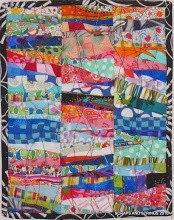


 Posts
Posts


